Blog

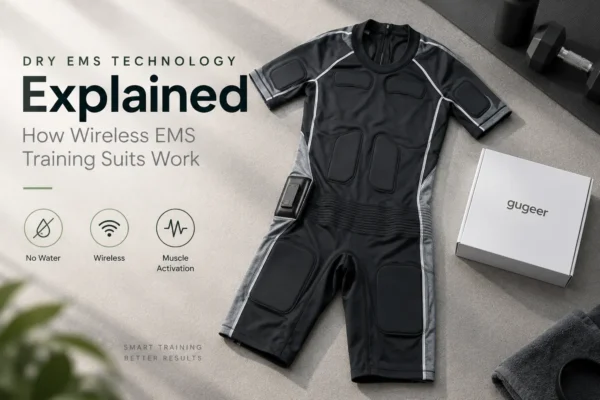
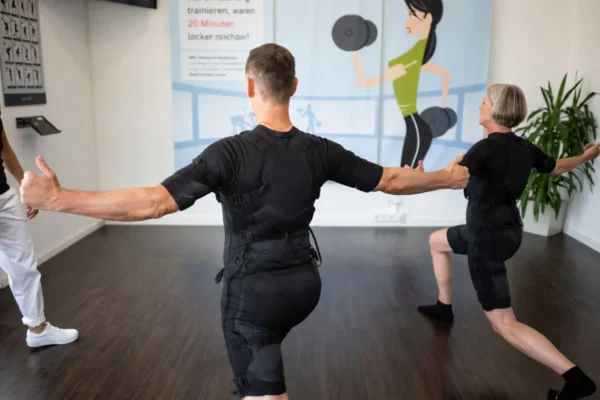
An EMS workout suit uses controlled electrical impulses to stimulate motor nerves and support muscle contractions during exercise.
Unlike traditional training, EMS adds external electrical stimulation to voluntary movement. This can increase neuromuscular activation while allowing users to train multiple muscle groups at the same time.
But how does it actually work?
Let’s break down the science behind EMS muscle activation.
How Does an EMS Workout Suit Activate Muscles?
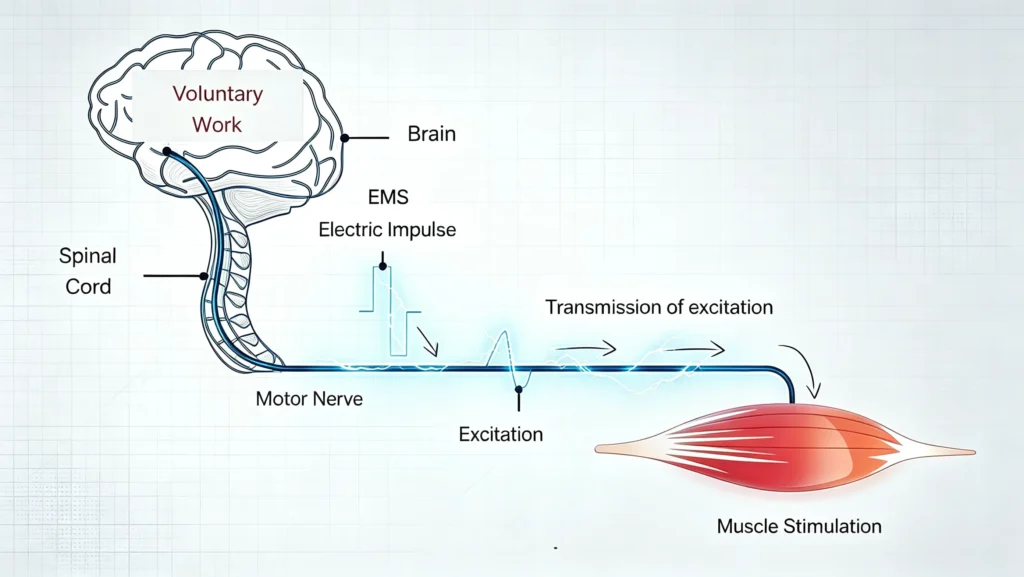
Muscles contract when they receive signals from motor nerves.
During conventional exercise, the process can be simplified as:
Brain → Motor Nerve → Muscle → Contraction
With an EMS workout suit, an additional electrical signal is introduced:
EMS Controller → Electrodes → Motor Nerve → Muscle → Contraction
The electrodes integrated into the suit deliver controlled electrical impulses to the body. These impulses can stimulate peripheral motor nerves and trigger muscle contractions.
EMS does not directly “force” muscles to grow. Instead, it provides external neuromuscular stimulation that can work alongside voluntary exercise.
Research on neuromuscular electrical stimulation shows that electrically evoked muscle contractions involve motor-unit recruitment patterns that differ from voluntary contractions. This is one of the key physiological features that makes EMS useful for training and rehabilitation applications.
Why Does Muscle Activation Matter?
Muscles are controlled by groups of motor units. A motor unit consists of a motor neuron and the muscle fibers it controls.
During voluntary exercise, the nervous system progressively recruits motor units according to the demands of the movement. As exercise intensity increases, additional motor units can be recruited to produce more force.
EMS provides an alternative way to stimulate motor nerves externally.
When combined with appropriate voluntary movement, EMS may provide additional neuromuscular stimulation and increase the training demand placed on selected muscle groups.
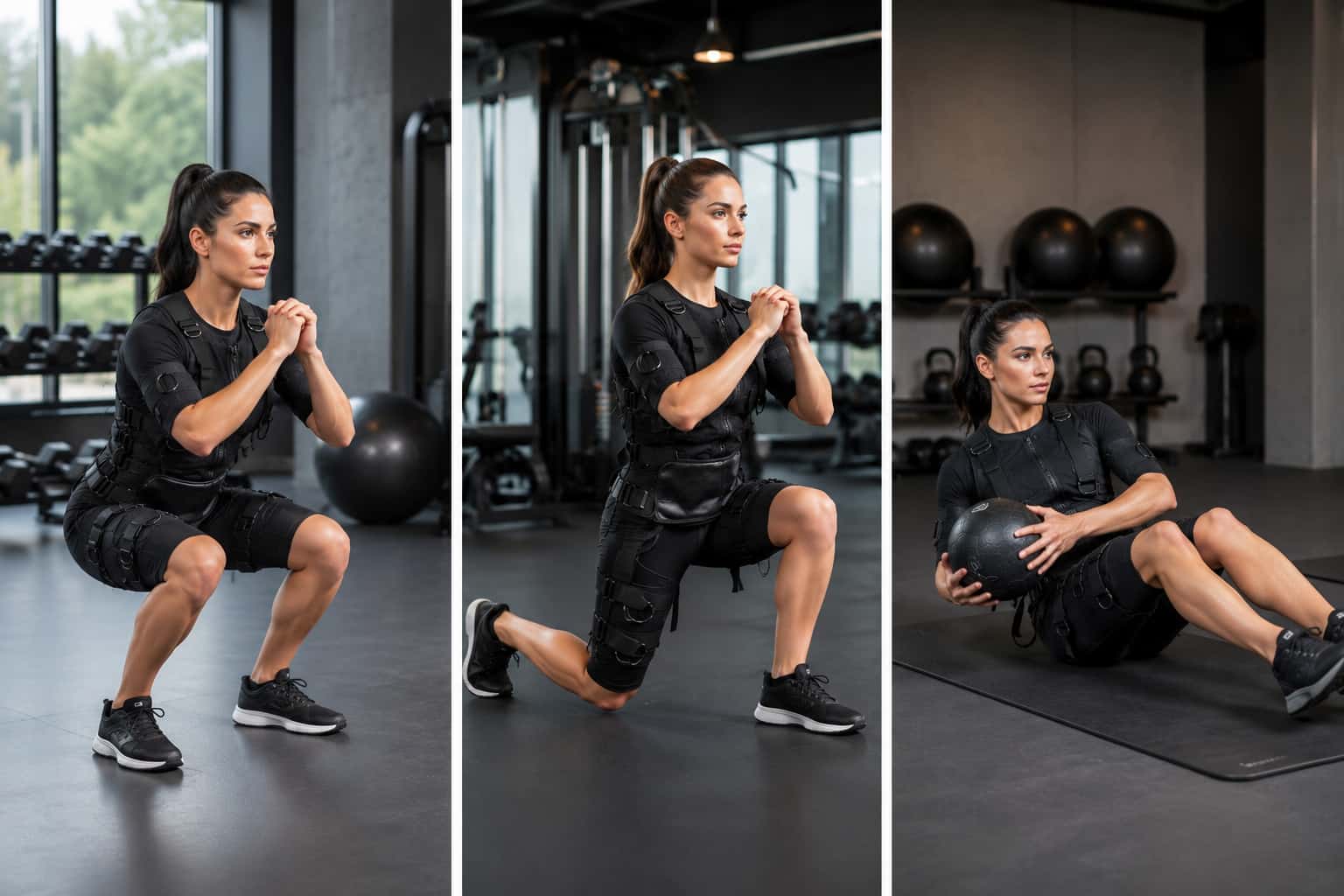
Common exercises used with EMS include:
- Squats
- Lunges
- Core exercises
- Functional movements
- Strength exercises
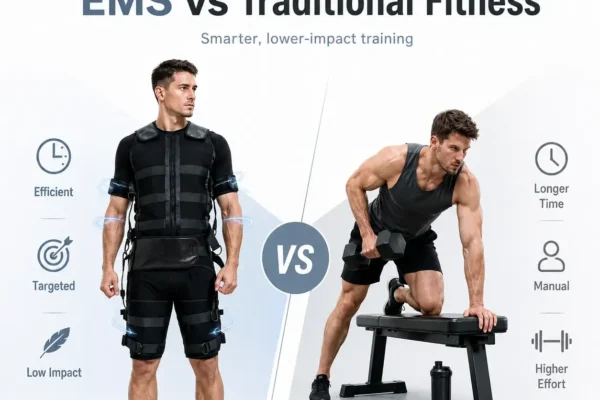
However, EMS should be viewed as a complementary training technology, rather than a complete replacement for conventional resistance exercise.
How Do EMS Electrodes Target Different Muscle Groups?
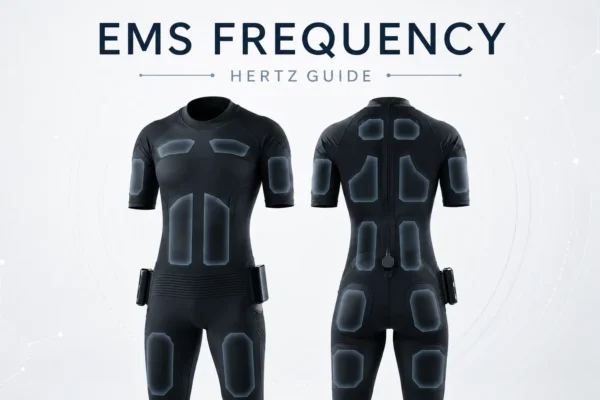
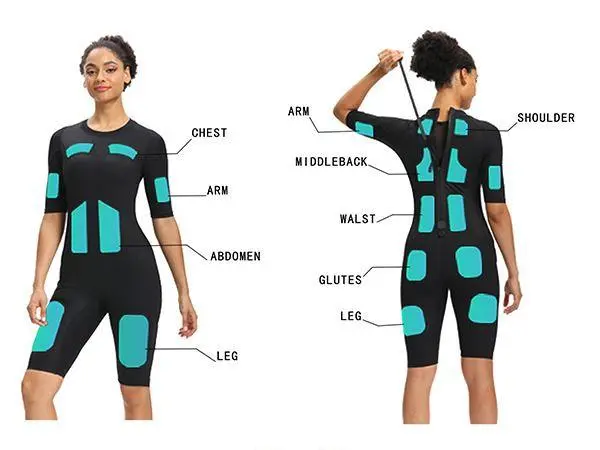
One of the main features of a full-body EMS workout suit is its multiple electrode zones.
Depending on the suit design, electrodes may be positioned around major muscle groups such as:
- Chest
- Upper back
- Lower back
- Abdominals
- Glutes
- Thighs
- Arms
This allows several muscle groups to receive stimulation during the same training session.
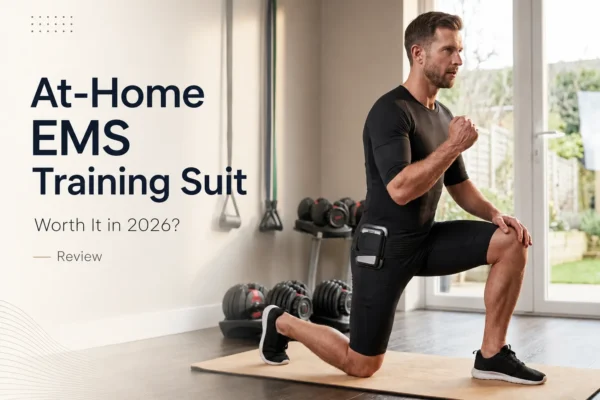
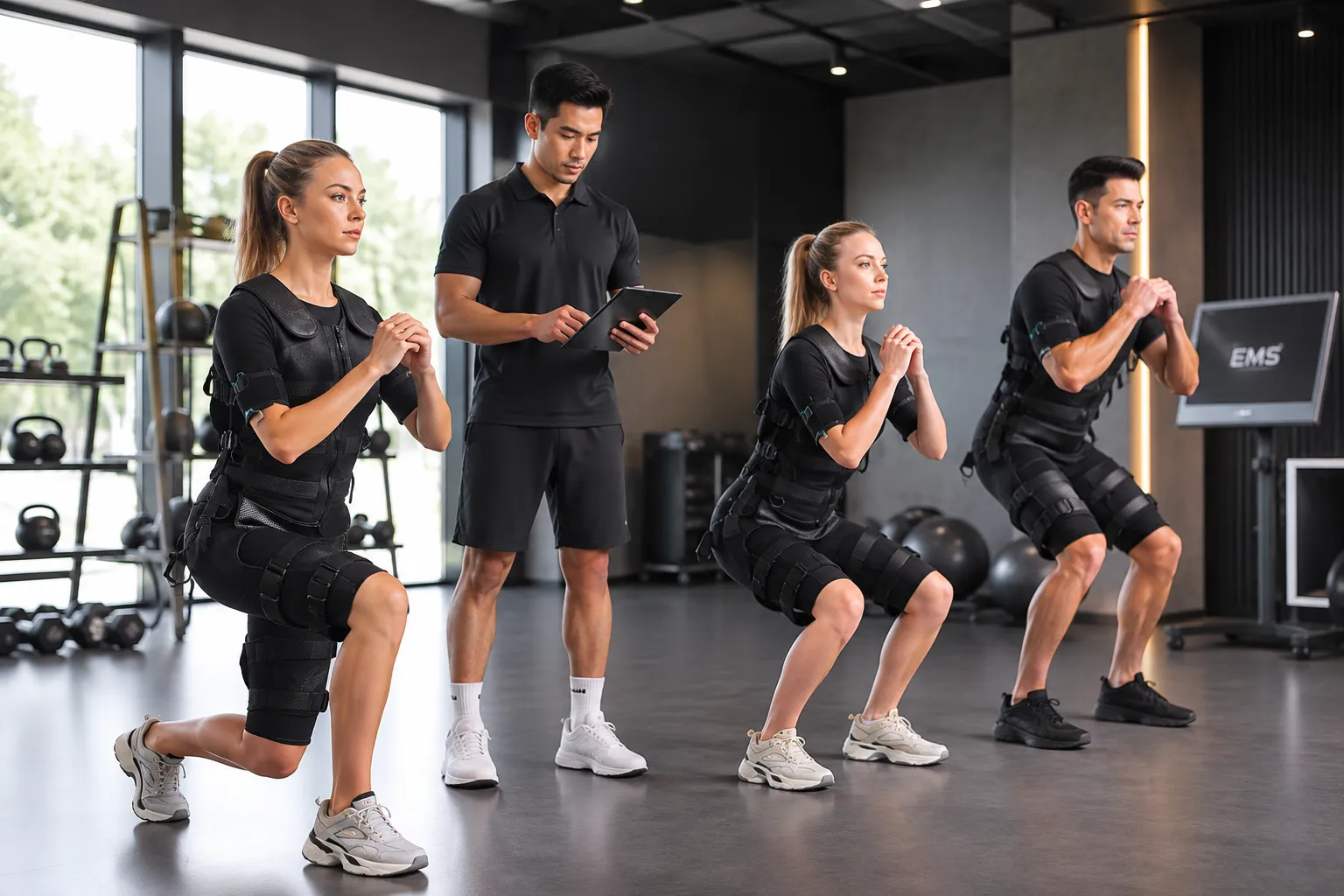
For example, during an EMS squat, the user can perform the movement voluntarily while the EMS system provides additional stimulation to selected muscle groups.
Traditional Squat
- Quadriceps activation
- Glute activation
- Core stabilization
EMS Squat
- Voluntary muscle contraction
- External electrical stimulation
- Additional neuromuscular demand
The combination creates a different training stimulus compared with voluntary exercise alone.
What Makes a Modern EMS Workout Suit Effective?
Modern EMS systems have evolved beyond traditional wired equipment.
For professional fitness studios, distributors, and EMS training facilities, the usability of the complete system is just as important as the stimulation technology itself.
1. Multiple Electrode Zones
Multiple electrode zones allow the system to stimulate several major muscle groups during one session.
This is particularly useful for full-body EMS training and supervised personal training.
2. Adjustable Stimulation Intensity
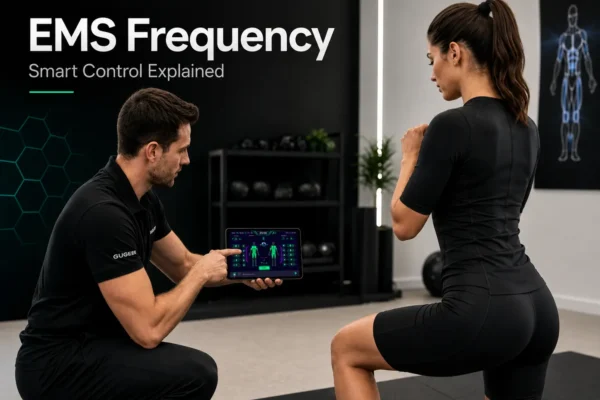
Professional EMS systems should allow stimulation intensity to be adjusted according to:
- User experience
- Muscle sensitivity
- Training goals
- Exercise selection
- Training condition
Individualized intensity control helps trainers provide a more controlled training experience.
3. Wireless EMS Technology
Wireless systems remove the need for long cables connecting the user to a stationary control unit.
This can provide greater freedom of movement during:
- Functional training
- Personal training
- Small-group sessions
- Studio-based workouts
How Does EMS Work With Exercise?
EMS is generally most useful when integrated into a structured training program.
Instead of simply standing still while receiving electrical stimulation, users can perform controlled movements while the EMS system provides additional neuromuscular stimulation.
For example:
Squat
Targets the lower body while stimulating the quadriceps and gluteal muscles.
Lunge
Combines unilateral movement with lower-body muscle stimulation.
Core Training
Can be combined with controlled abdominal and functional exercises.
Functional Training
Allows users to move naturally while receiving stimulation from multiple electrode zones.
This combination of voluntary movement + electrical stimulation is one of the main reasons EMS has become an area of interest in fitness and sports performance research.
Where Are EMS Workout Suits Used?
EMS technology can be applied across several professional environments.
Fitness Studios
EMS training suits can support:
- Personal training
- Full-body workouts
- Small-group sessions
- Time-efficient training formats
Trainers can adjust stimulation and exercise selection according to the individual user.
Sports Performance
Athletes may use EMS as a supplementary training method alongside conventional strength and sport-specific training.
Potential applications include:
- Muscle activation
- Strength development
- Training variation
- Recovery-oriented programs
EMS should complement rather than replace sport-specific training.
Rehabilitation Support
Neuromuscular electrical stimulation has also been studied and used in rehabilitation settings.
Depending on the clinical situation, electrical stimulation may be used to support:
- Muscle reactivation
- Maintenance of muscle function
- Neuromuscular training
- Selected rehabilitation programs
Clinical applications should always be designed and supervised by qualified healthcare professionals.
What Does Scientific Research Say About EMS?
Research into neuromuscular electrical stimulation has examined its effects on muscle activation, strength, neuromuscular function, and rehabilitation.
Studies show that electrical stimulation can activate skeletal muscle through peripheral nerve stimulation, while the recruitment pattern can differ from normal voluntary exercise.
Research also indicates that NMES can be used as a training or rehabilitation modality, although outcomes depend heavily on factors such as stimulation parameters, training protocols, the target muscle, and the individual’s condition.
EMS May Help Support:
- Neuromuscular stimulation
- Muscle activation
- Strength development when appropriately combined with exercise
- Selected rehabilitation applications
EMS Does Not Guarantee:
- Automatic muscle growth
- Identical results for every user
- Replacement of conventional exercise
- Results without appropriate training and recovery
The effectiveness of EMS depends on how the technology is applied.
Important factors include:
- Stimulation frequency
- Intensity
- Pulse duration
- Electrode placement
- Training frequency
- Exercise selection
- User condition
- Professional supervision
Is EMS a Replacement for Traditional Exercise?
No.
EMS should be considered a complementary training technology.
Traditional resistance training remains important for developing movement skills, mechanical loading capacity, coordination, and overall physical fitness.
EMS adds another form of neuromuscular stimulation that can be integrated into appropriate training programs.
The best results depend not only on the EMS device itself, but also on:
- Training program design
- Stimulation parameters
- Exercise technique
- Training consistency
- Recovery
- Nutrition
- Individual response
This balanced approach is especially important for professional fitness facilities that want to provide safe and structured EMS services.
Choosing the Right EMS Workout Suit
For fitness studios, distributors, and EMS equipment buyers, product design should be evaluated beyond stimulation output alone.
Important factors include:
Electrode Configuration
Does the suit provide appropriate coverage for the target muscle groups?
Wireless Connectivity
Can users move freely during training?
Intensity Control
Can stimulation levels be adjusted for different users?
Electrode Technology
Are the electrodes designed for convenient and repeatable daily use?
Software and Control
Does the system support practical session management and parameter adjustment?
Comfort and Fit
Can users perform natural movements while wearing the suit?
Manufacturer Support
Does the supplier provide OEM, ODM, technical support, and after-sales service?
For commercial buyers, the quality of the complete EMS ecosystem can be just as important as the garment itself.
Conclusion: EMS Workout Suit as a New Generation Muscle Activation Technology
An EMS workout suit works by delivering controlled electrical impulses through integrated electrodes, stimulating motor nerves and enhancing muscle activation during exercise.
The science behind EMS is based on neuromuscular physiology: muscles respond to electrical signals, whether generated naturally by the nervous system or externally through carefully controlled stimulation.
For modern fitness facilities, EMS technology provides a unique training option that combines wearable technology, efficient workouts, and personalized intensity control.
As research continues to develop, EMS training is becoming an increasingly recognized tool for fitness professionals, athletes, and rehabilitation specialists seeking innovative ways to improve muscle activation.
Explore Our Solutions & Connect With Us
Looking for high-performance, customizable EMS solutions for your business? Check out our flagship commercial training suits:
- Wireless Split Vest EMS Training Suit – Flexible two-piece suit design for versatile studio workouts.
- Wireless Dry Split EMS Training Suit – Premium water-free technology for fast prep and quick client turnaround.
- Wireless One-Piece Vest EMS Training Suit – Full-body ergonomic fit designed for intense training sessions.
- Wireless Dry One-Piece EMS Training Suit – Seamless, dry-electrode all-in-one solution for commercial daily use.
For the latest product updates, factory insights, and live event coverage, follow us on Instagram and connect with us on Facebook.
References
1.Kemmler W, et al. (2016). Effects of whole-body electromyostimulation on body composition and strength: A systematic review and meta-analysis. Evidence-Based Complementary and Alternative Medicine.
2.Maffiuletti NA. (2010). Physiological and methodological considerations for the use of neuromuscular electrical stimulation. European Journal of Applied Physiology.
3.Gregory CM, Bickel CS. (2005). Recruitment patterns in human skeletal muscle during electrical stimulation. Physical Therapy.
4.Filipovic A, et al. (2011). Electromyostimulation—A systematic review of the effects of different EMS protocols on human skeletal muscle. Clinical Interventions in Aging.