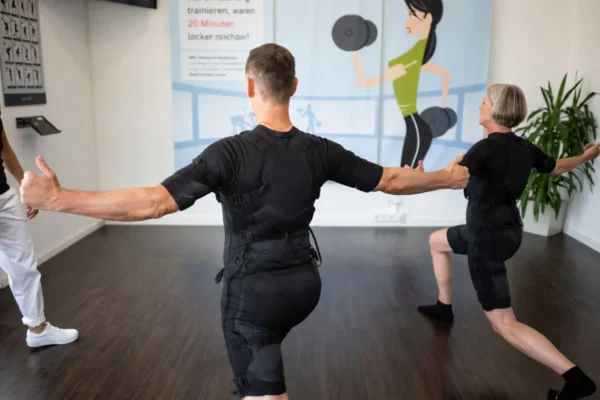
When people first try EMS (Electrical Muscle Stimulation) training, they often ask:
“What does the frequency setting mean, and why does it matter?”
In an EMS training system, frequency is an important setting. It affects how muscles respond to electrical signals.
Frequency is measured in Hertz (Hz). It shows how many electrical pulses the muscles receive each second.
For example:
- 10 Hz = 10 pulses per second
- 50 Hz = 50 pulses per second
- 100 Hz = 100 pulses per second
Different frequency ranges create different muscle responses. They can affect muscle tension, comfort, strength, endurance, and fatigue.
Therefore, understanding EMS frequency can help trainers and EMS studio operators choose better training settings.
What Happens Inside the Muscle During EMS Stimulation?
During normal exercise, the brain sends signals through the nervous system. These signals activate motor nerves. As a result, the muscles contract.
EMS works in a similar way. However, it uses controlled electrical pulses through electrodes placed on the skin.
These pulses stimulate motor nerves and cause muscle contractions.
The frequency of the pulses can affect:
- Contraction speed
- Muscle tension
- Movement smoothness
- Energy use
- Muscle fatigue
In general, lower frequencies create separate muscle contractions. Higher frequencies create smoother and more continuous contractions.
EMS Frequency Range Explained: From Low to High Hertz
1–10 Hz: Low Frequency for Gentle Muscle Activation
Low-frequency EMS usually creates slow and separate muscle contractions.
At this range, muscles may feel like they are gently twitching. In addition, the energy demand is often lower.
This range may be useful for:
- Beginner EMS sessions
- Muscle activation
- Recovery programs
- Low-intensity rehabilitation
However, very low frequencies may not create a strong continuous contraction.
For example, a rehabilitation specialist may use a lower frequency to activate muscles after a period of inactivity.
20–50 Hz: Controlled Muscle Activation and Functional Training
The 20–50 Hz range is common in neuromuscular electrical stimulation research.
At this range, muscle contractions become smoother. Force output can also increase.
In addition, this range may offer a good balance between muscle activation and fatigue.
Common uses include:
- Functional rehabilitation
- Strength maintenance
- Mobility training
- General EMS fitness
Therefore, many EMS programs use medium frequency settings for controlled training.
50–100 Hz: Strength Training and High-Intensity EMS
Many EMS fitness programs use frequencies between 50 and 100 Hz.
This range can create stronger and smoother muscle contractions. It may also support higher muscle force.
In addition, some studies have tested frequencies around 75 Hz in strength-focused EMS programs.
This range is often used for:
- EMS fitness studios
- Athletic training
- Strength programs
- Full-body EMS workouts
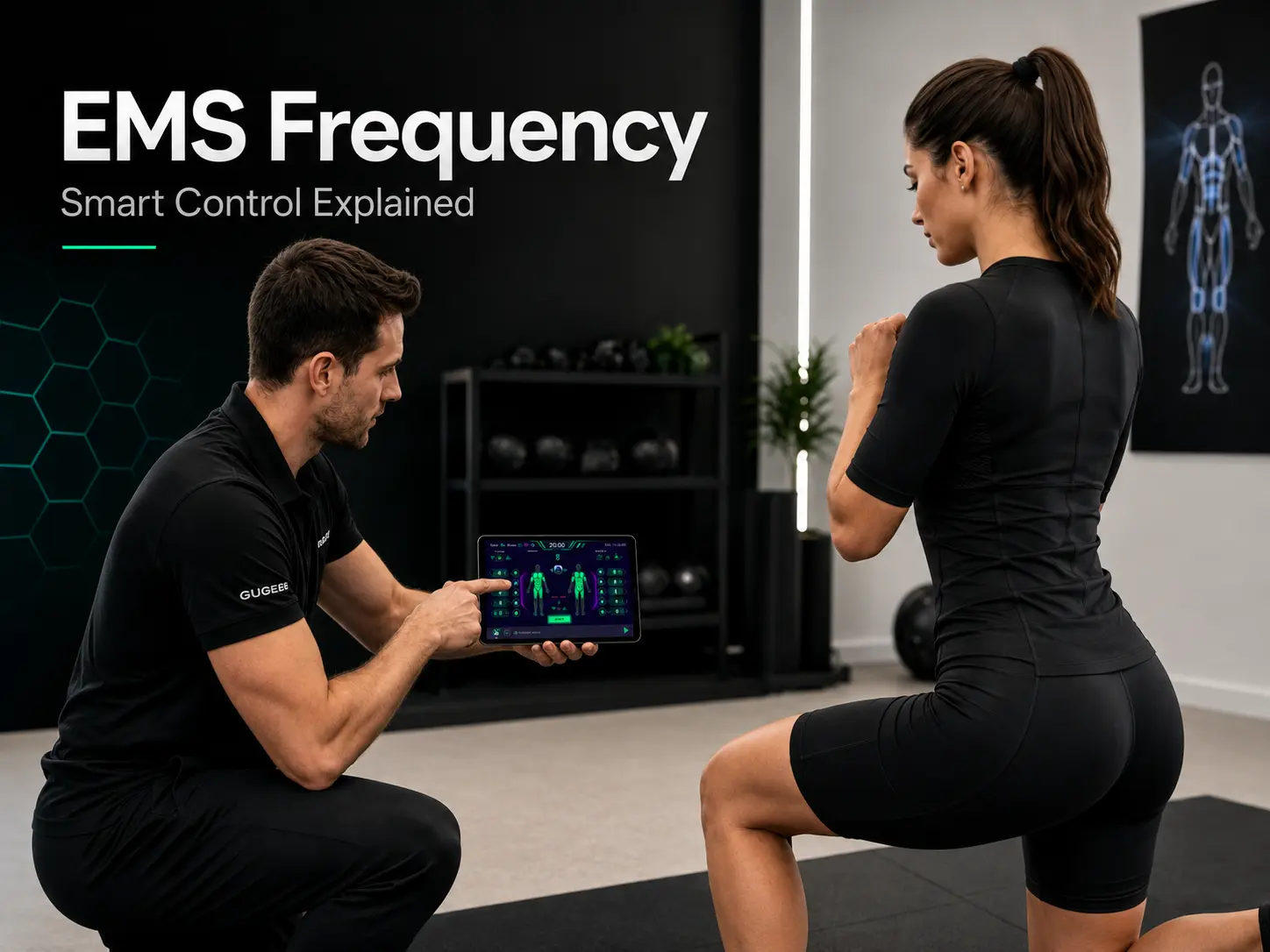
For example, during a squat, the EMS suit can stimulate the muscles while the user moves.
However, frequency should not work alone. Trainers should also adjust intensity and other settings.
Above 100 Hz: Faster Stimulation With More Fatigue
Higher frequencies create faster electrical pulses.
However, a higher number does not always mean a better result.
At very high frequencies, muscles may fatigue faster. Energy use may also increase. In addition, some users may feel less comfortable.
Therefore, professional EMS systems usually combine frequency with other settings.
These include:
- Pulse width
- Intensity
- Work and rest time
- Training duration
How Do Professional EMS Systems Choose the Right Frequency?
There is no single EMS frequency that works best for everyone.
Instead, trainers should choose the setting based on the training goal, muscle group, and user experience.
Training Goal
Different goals need different settings.
| Goal |
Common Frequency Approach |
| Muscle activation |
Lower frequencies |
| Endurance training |
Low to medium frequencies |
| Strength development |
Medium to higher frequencies |
| Recovery programs |
Comfortable lower settings |
For example, a recovery session may use lower settings. In contrast, a strength session may use a higher frequency.
Muscle Group
Different muscles may respond in different ways.
This can depend on:
- Muscle size
- Muscle fiber type
- Training level
- User sensitivity
Large muscles, such as the quadriceps, glutes, and back muscles, may need careful adjustment.
Therefore, trainers should not use the same setting for every muscle group.
User Experience Level
Beginners usually need a more gradual start.
They may benefit from lower intensity and moderate frequency.
Experienced users may tolerate stronger contractions. However, the settings should still stay within a comfortable range.
As a result, professional EMS systems should allow trainers to adjust programs for each user.
Frequency Is Only One Part of EMS Technology
Frequency is important, but it is only one part of EMS training.
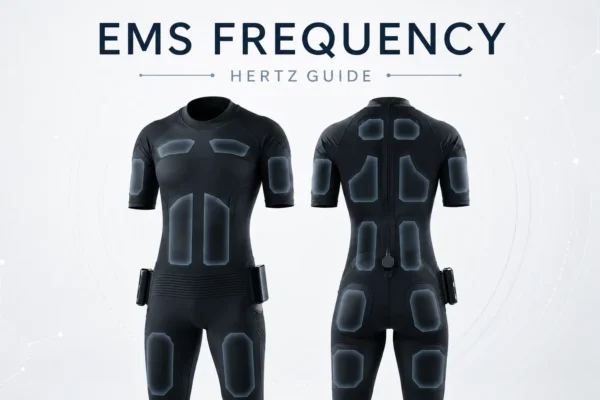
A good EMS program also depends on pulse width, intensity, and electrode position.
Frequency (Hz)
Frequency controls how fast the electrical pulses occur.
Pulse Width (μs)
Pulse width controls how long each pulse lasts.
It can affect how the motor nerves respond.
Intensity (mA)
Intensity controls the strength of the electrical stimulation.
Electrode Position
Electrode position decides which muscles receive stimulation.
Therefore, a professional EMS program should balance all these settings.
Simply increasing frequency does not always improve the result.
How Gugeer EMS Technology Applies Frequency Control
Modern EMS equipment gives trainers more control over training settings.
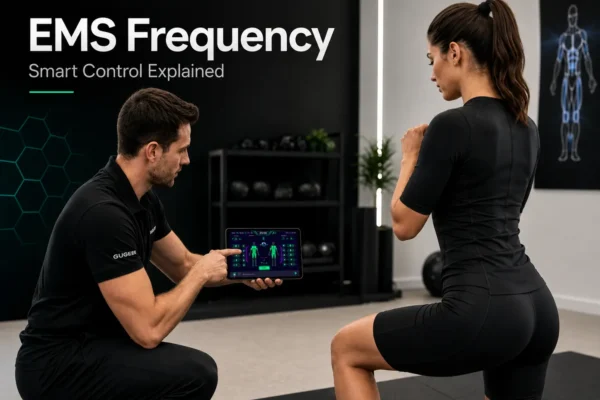
Gugeer EMS systems can support different training needs through adjustable settings and smart control.
Depending on the system, trainers can manage:
- Frequency
- Training intensity
- Muscle groups
- User programs
In addition, multi-user control can help EMS studios manage several users more efficiently.
This makes the system suitable for fitness studios, rehabilitation centers, and professional training facilities.
Final Thoughts: Choosing the Right Hertz for Better EMS Results
EMS frequency is not about choosing the highest number.
Instead, the right frequency depends on the training goal and the user.
Trainers should consider the user’s experience, muscle condition, session intensity, and recovery needs.
Therefore, better EMS training comes from using the right combination of settings.
Frequency, pulse width, intensity, and electrode placement should work together.
Overall, a well-designed EMS program can provide a more controlled and personalized training experience.
References
- Doucet BM, Lam A, Griffin L. Neuromuscular electrical stimulation for skeletal muscle function. Yale J Biol Med. 2012 Jun;85(2):201-15. PMID: 22737049; PMCID: PMC3375668.
- Patel P, Green M, Tram J, Wang E, Murphy M, Abd-Elsayed AA, Chakravarthy K. Latest Advancements in Transcutaneous Electrical Nerve Stimulation (TENS) and Electronic Muscle Stimulation (EMS): Revisiting an Established Therapy with New Possibilities. J Pain Res. 2025 Jan 9;18:137-153. doi: 10.2147/JPR.S493162.
- Balke M, Teschler M, Schäfer H, Pape P, Mooren FC, Schmitz B. Therapeutic Potential of Electromyostimulation (EMS) in Critically Ill Patients—A Systematic Review. Front Physiol. 2022;13:865437. doi: 10.3389/fphys.2022.865437.
Featured Commercial EMS Suits & Community
Looking for reliable wireless EMS gear for your studio? Check out our top products:
Follow us on Instagram and Facebook for new product news and factory updates!