Blog
Table of Contents
Electrical Muscle Stimulation (EMS) has evolved from a technology primarily associated with rehabilitation and physiotherapy into a training solution used in fitness, sports performance, and professional exercise environments.
As EMS technology continues to develop, dry EMS technology is attracting increasing attention because it can simplify preparation and provide a more convenient training experience compared with traditional wet electrode systems.
Modern wireless EMS training suits combine conductive textile technology, strategically positioned electrodes, wireless communication, and intelligent control systems to provide targeted electrical stimulation during exercise.
For fitness studios, personal trainers, rehabilitation providers, and EMS equipment distributors, understanding how dry EMS technology works can help when choosing the right EMS training system for professional applications.
What Is Dry EMS Technology?
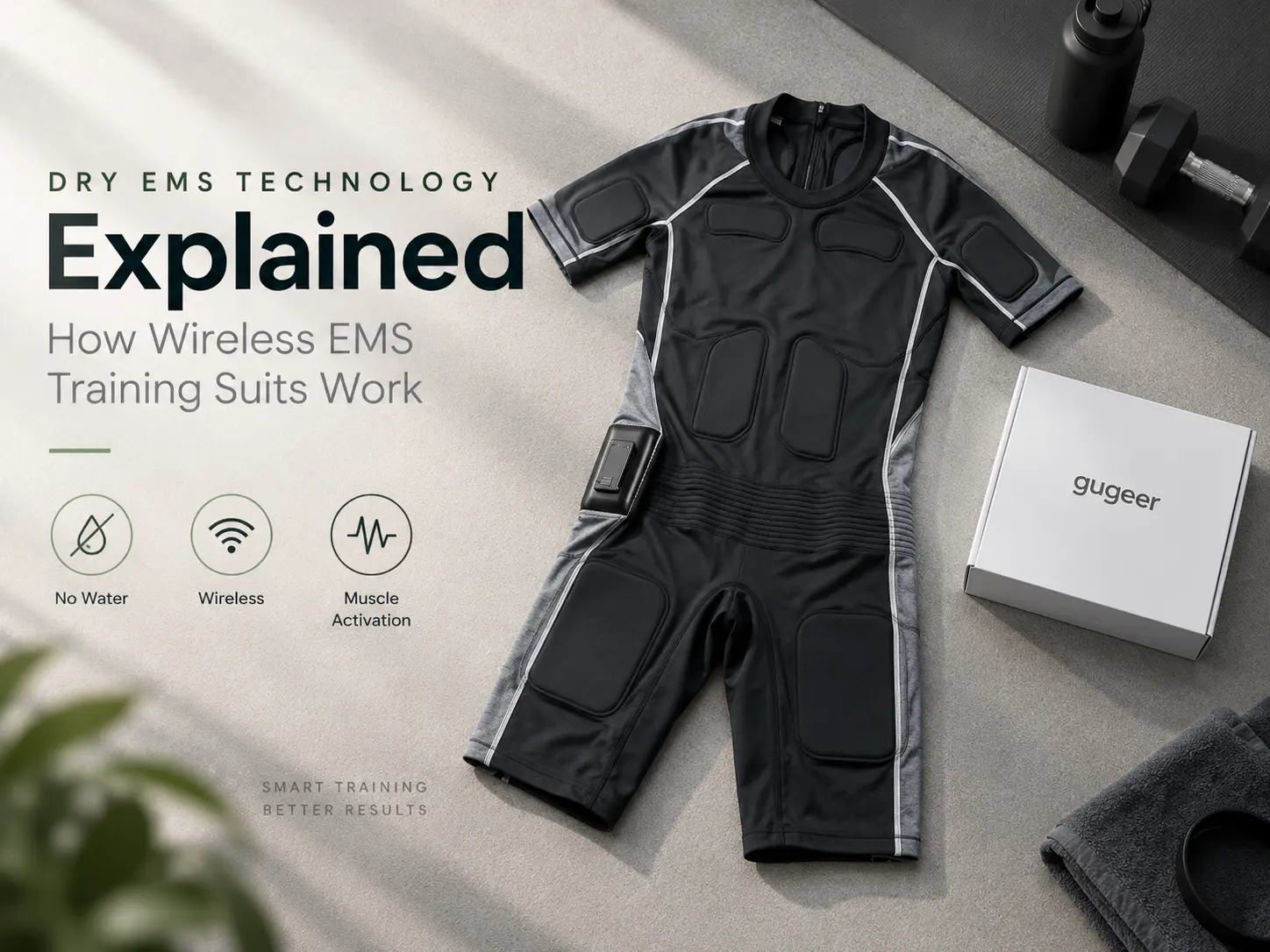
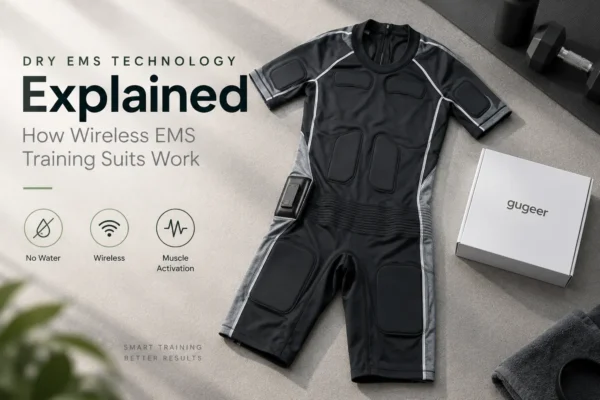
Dry EMS technology refers to an electrical muscle stimulation system that uses dry conductive electrodes or conductive textile materials without requiring users to spray water onto the electrode areas before training.
Traditional wet EMS systems typically use moisture to improve electrical conductivity between the electrodes and the user’s skin. Dry EMS systems are designed with conductive materials and electrode structures that can maintain effective electrical contact without this additional preparation step.
A typical dry EMS training system may include:
- EMS control unit
- Wireless communication system
- Dry conductive electrodes
- EMS training suit
- Mobile or tablet control application
- Adjustable stimulation parameters
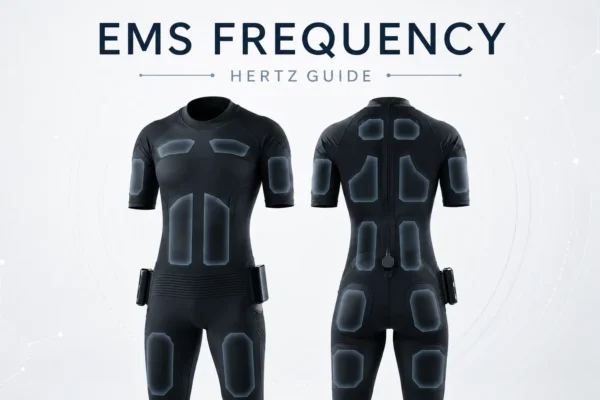
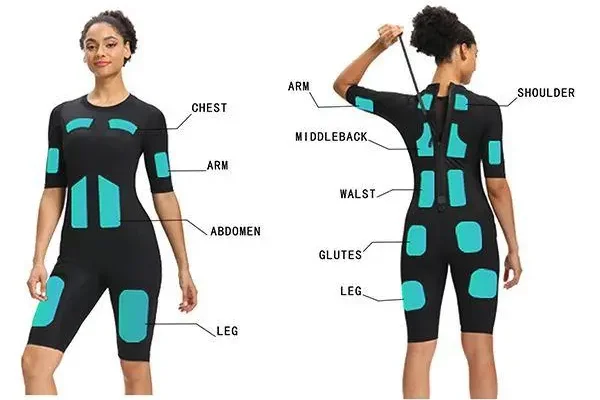
During training, controlled electrical impulses are delivered through electrodes positioned around different muscle groups. Depending on the suit design, stimulation areas may include the chest, back, abdomen, glutes, thighs, and arms.
Dry EMS technology is therefore not simply a different type of garment. It involves the combination of electrode materials, garment construction, electrical control, and wireless system design.
How Does a Dry EMS Training Suit Work?
A dry EMS training suit uses conductive electrode areas integrated into the garment to transmit controlled electrical stimulation.
The suit is designed to keep the electrodes positioned close to the user’s skin during movement. The EMS control unit then sends electrical signals to selected muscle groups according to the training program and intensity settings.
A typical training process includes:
- The user puts on the EMS training suit.
- The control unit connects wirelessly with the suit.
- The trainer selects an appropriate training program.
- Stimulation intensity is adjusted for different muscle groups.
- Electrical impulses are delivered through the electrodes during exercise.
- The user performs functional or strength-based movements under professional guidance.
The combination of EMS stimulation and physical movement allows EMS to be incorporated into different training formats rather than requiring users to remain stationary.
Dry EMS vs. Wet EMS: What Is the Difference?
One of the most important differences between dry and wet EMS systems is how electrical conductivity is established.
Dry EMS Systems
Dry EMS systems use conductive electrode materials that are designed to operate without additional water preparation.
Potential advantages include:
- No need to spray water before each session
- Faster preparation
- Simplified daily operation
- Convenient use in commercial training environments
- Less preparation between consecutive sessions
These characteristics can be particularly useful for EMS fitness studios and other environments where trainers conduct multiple sessions throughout the day.
Wet EMS Systems
Wet EMS systems use moisture to improve conductivity between the electrode and the user’s skin.
Wet electrode systems remain an established option for EMS applications and can provide effective electrical contact when properly prepared.
Typical considerations include:
- Water or moisture preparation before training
- Electrode contact management
- Additional preparation between sessions
- Appropriate garment maintenance
Neither system is universally suitable for every application. The appropriate choice depends on the training environment, garment design, operating requirements, and user needs.
Why Is Wireless Dry EMS Becoming More Popular?
The development of wireless communication has changed how EMS training systems can be used.
Traditional wired EMS systems may connect the training garment to a controller using physical cables. Although this configuration can be effective, cables may limit movement and make certain functional exercises less convenient.
A wireless dry EMS training suit removes the need for a direct wired connection during training, allowing users to move more naturally.
Greater Freedom of Movement
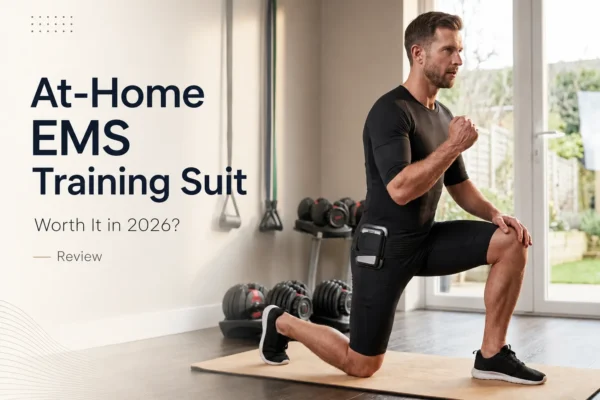
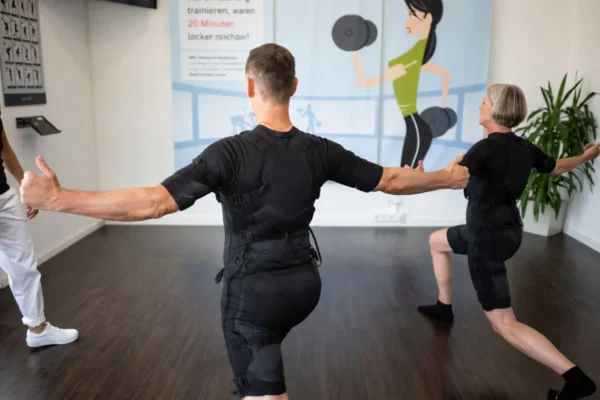
Wireless EMS systems allow users to perform exercises such as:
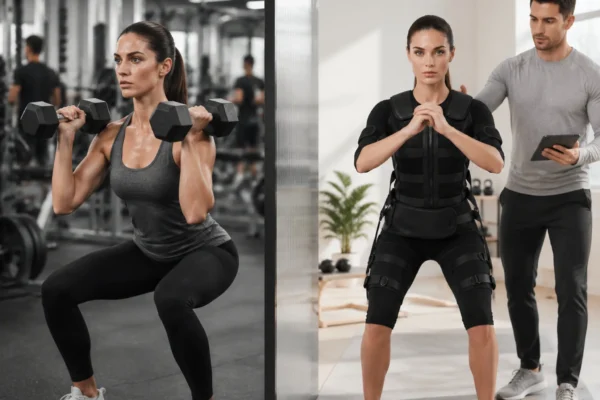
- Squats
- Lunges
- Core exercises
- Functional movements
- Balance exercises
- Strength training
This makes wireless EMS particularly suitable for training programs that combine electrical stimulation with active movement.
Faster Session Preparation
Dry electrode technology can reduce the preparation steps required before a training session.
For commercial EMS studios, shorter setup times can make it easier to manage consecutive sessions and improve the overall training workflow.
Convenient Digital Control
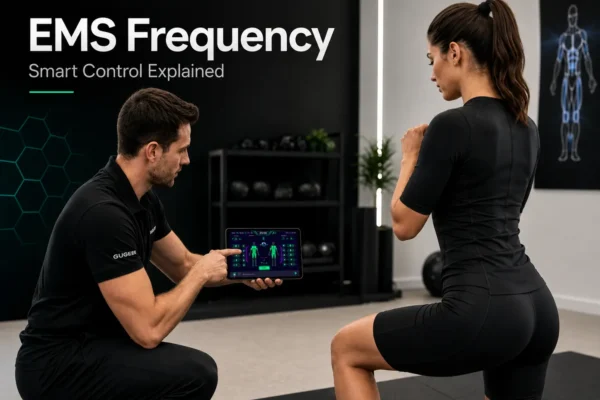
Modern wireless EMS systems can also integrate with mobile or tablet applications.
Depending on the system, trainers may be able to:
- Adjust stimulation intensity
- Control different muscle groups
- Select training programs
- Manage user profiles
- Monitor training sessions
- Customize training parameters
Digital control can help trainers manage sessions more efficiently while providing users with a more personalized training experience.
Where Is Dry EMS Technology Used?
Dry EMS technology can be applied across several professional training environments.
EMS Fitness Studios
EMS fitness studios use whole-body EMS systems as part of personal training and functional fitness programs.
Common applications include:
- Strength training
- Functional fitness
- Core training
- Body conditioning
- Personal training
- Small-group EMS sessions
Wireless dry EMS systems can be particularly convenient for commercial studios because they combine simplified preparation with greater freedom of movement.
Rehabilitation and Physical Therapy
EMS technology has a long history of use in professional rehabilitation environments.
Under the guidance of qualified healthcare or rehabilitation professionals, EMS systems may be incorporated into programs involving:
- Muscle activation
- Functional exercise
- Recovery support
- Mobility-related training
- Post-injury exercise
For rehabilitation applications, factors such as adjustable stimulation parameters, electrode positioning, garment comfort, and professional control are important when selecting an EMS system.
Sports Performance Training
Athletes and professional trainers can also use EMS as a supplementary training method.
Potential applications include:
- Muscle activation
- Strength and conditioning
- Core training
- Muscle endurance
- Training variation
- Low-impact exercise
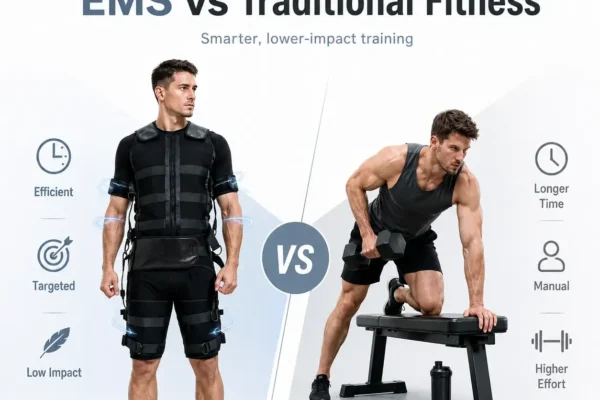
EMS is generally used as a complement to conventional strength and functional training rather than as a replacement for exercise.
What Should You Look for in a Dry EMS Training Suit?
Businesses considering a professional EMS system should evaluate more than just the stimulation function.
Conductive Electrode Design
The quality and positioning of the electrodes are important for maintaining consistent contact and delivering stimulation to the intended muscle areas.
A well-designed dry EMS suit should integrate electrodes into the garment in a way that supports both electrical performance and freedom of movement.
Garment Comfort and Fit
The EMS suit needs to maintain appropriate electrode contact while allowing users to perform natural movements.
Factors to consider include:
- Garment flexibility
- Electrode positioning
- Adjustable fit
- Material comfort
- Ease of putting on and removing the suit
Comfort becomes especially important when EMS equipment is used repeatedly throughout the day.
Wireless Communication
For commercial EMS applications, stable wireless communication is an important part of the overall system.
A wireless EMS solution should provide reliable communication between the control unit, garment, and application during normal training sessions.
App and Software Control
An intelligent control application can make it easier for trainers to adjust stimulation parameters and manage different training sessions.
Software capabilities may include intensity adjustment, muscle-group control, program management, and user profile management.
Maintenance and Durability
Commercial EMS garments may be used frequently, so businesses should also consider garment maintenance, washable construction, replaceable components, and overall system durability.
Choosing a system designed for professional daily use can help businesses maintain consistent operations over the long term.
Why Dry EMS Technology Matters for Commercial EMS Businesses
For commercial fitness and rehabilitation providers, equipment efficiency can directly affect the daily training workflow.
Compared with systems that require extensive preparation, dry EMS technology can simplify the process of preparing users for training.
Combined with wireless communication and digital control, a dry EMS training system can provide:
- Faster preparation
- Flexible movement
- Convenient intensity control
- Professional training management
- A more streamlined training workflow
These factors make dry EMS technology an increasingly interesting option for businesses developing modern EMS training services.
Choosing the Right EMS Equipment Manufacturer
The performance of an EMS training system depends on more than the garment itself. The manufacturer should also have experience in textile development, electrode technology, electronic control systems, wireless communication, and software integration.
When evaluating an EMS equipment manufacturer, businesses should consider:
- Dry and wet electrode options
- Wireless EMS technology
- EMS garment design
- Electrode positioning
- App and software capabilities
- Garment maintenance
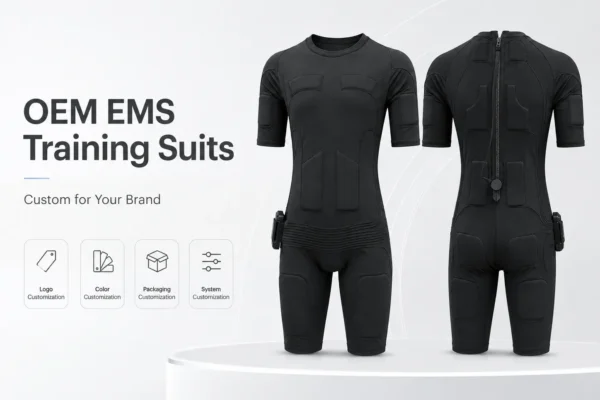
- OEM and ODM support
- Product customization
- Technical support
For distributors and private-label brands, OEM and ODM capabilities can also be important when developing EMS products for specific markets.
Gugeer Wireless Dry EMS Solutions
Gugeer develops wireless EMS training systems for commercial fitness, rehabilitation, and professional training applications.
Our EMS solutions include wireless EMS training suits, dry and wet electrode systems, EMS control applications, accessories, and OEM and ODM customization services.
By combining EMS garment technology with wireless communication and intelligent control, Gugeer aims to provide practical EMS solutions for businesses looking to develop or expand their EMS services.
Whether you are operating an EMS fitness studio, rehabilitation facility, sports training center, or EMS equipment distribution business, selecting the right EMS technology and manufacturing partner is an important step in building a reliable training solution.
Conclusion
Dry EMS technology represents an important development in modern EMS training equipment.
By eliminating the need for water preparation, dry electrode systems can simplify training setup, while wireless communication provides greater freedom of movement. When combined with ergonomic garment design and intelligent control software, wireless dry EMS systems can support a wide range of professional fitness, rehabilitation, and sports training applications.
As EMS continues to develop, businesses should evaluate electrode technology, garment design, wireless performance, software control, maintenance, and manufacturer support when selecting an EMS training system.
For businesses looking for professional wireless EMS training suits or customized EMS equipment, Gugeer provides dry and wet electrode solutions together with OEM and ODM manufacturing support.