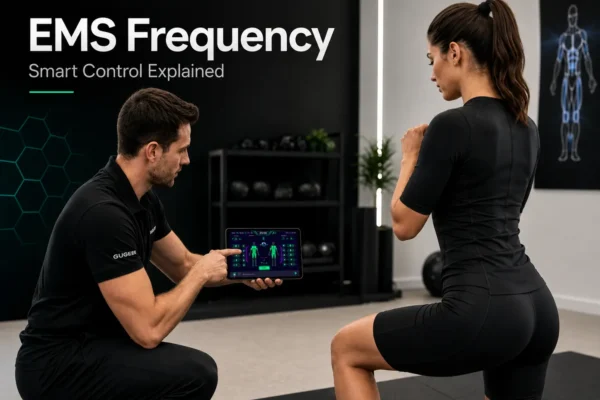
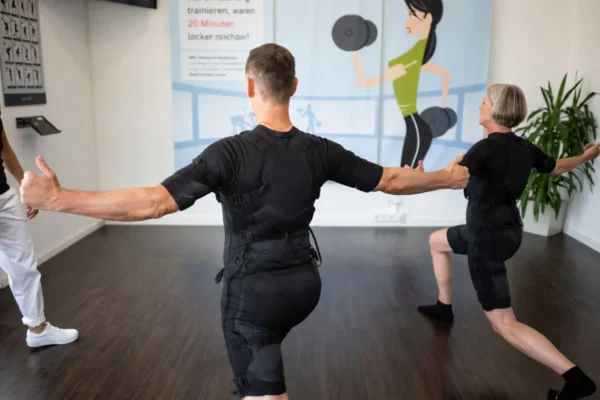
Yes, EMS training suits can work — but they are not a shortcut to fitness.
Research suggests that whole-body EMS (WB-EMS) can support muscle strength and lean muscle development when combined with active exercise. Evidence for significant fat loss, however, is more limited.
In simple terms, EMS adds electrical muscle stimulation to your workout. It can make training more time-efficient and provide targeted muscle activation, but it does not replace exercise, nutrition, or professional coaching.
What Is an EMS Training Suit and How Does It Work?
EMS stands for Electrical Muscle Stimulation.
During traditional exercise, your brain sends electrical signals through your nervous system to activate muscles.
The process is:
Brain → Nerves → Muscle contraction → Movement
EMS training adds an external stimulation source:
EMS device → Electrical impulses → Nerve stimulation → Muscle contraction
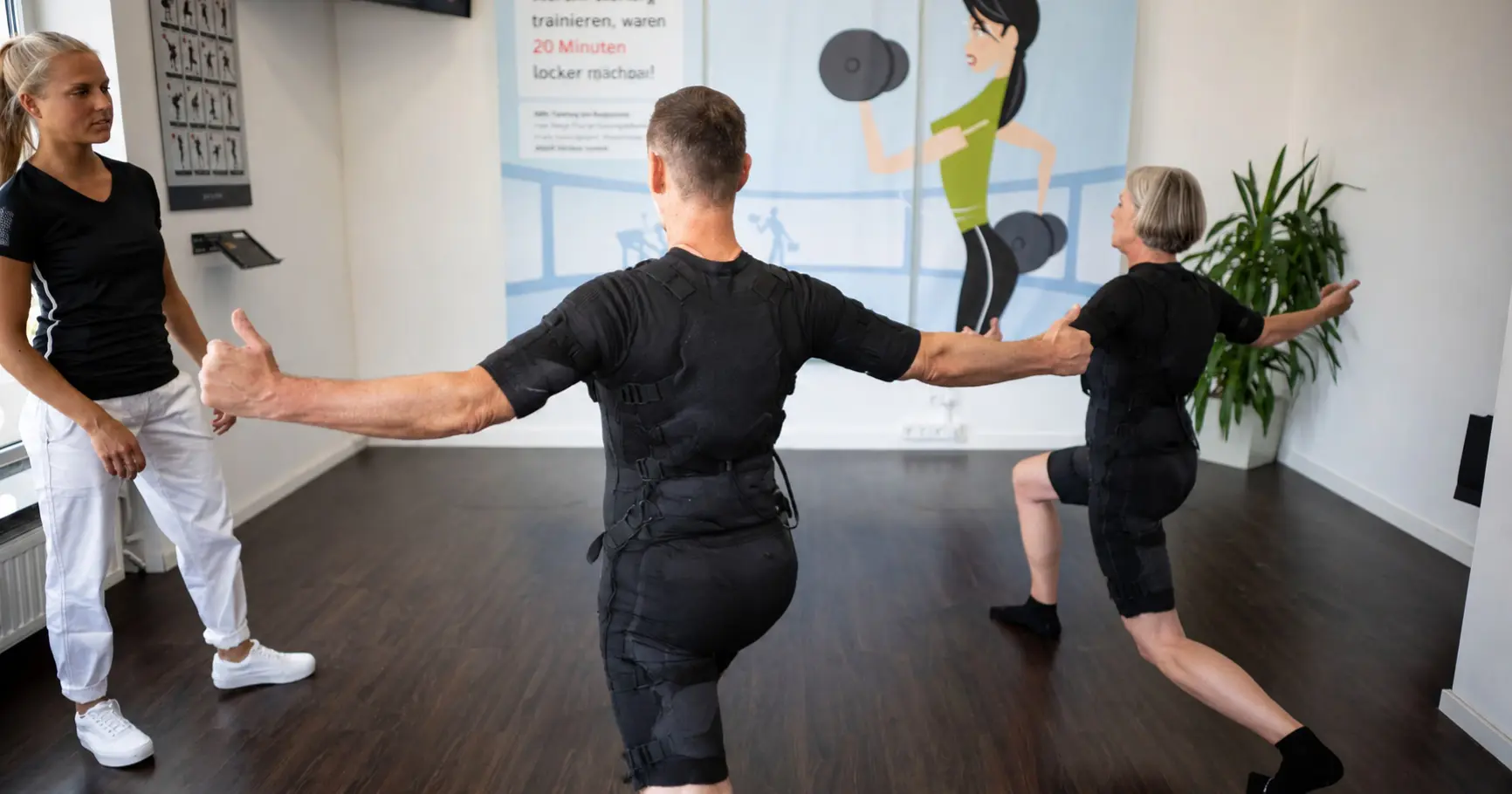
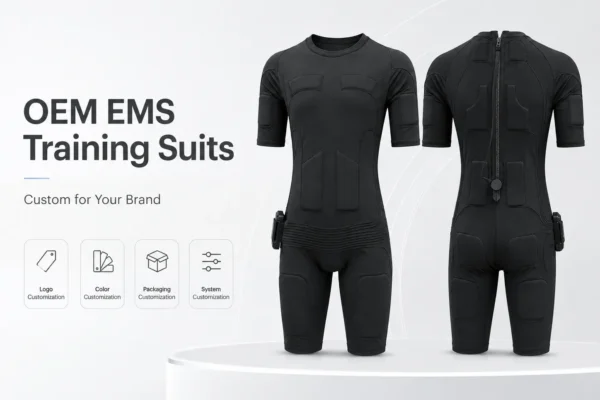
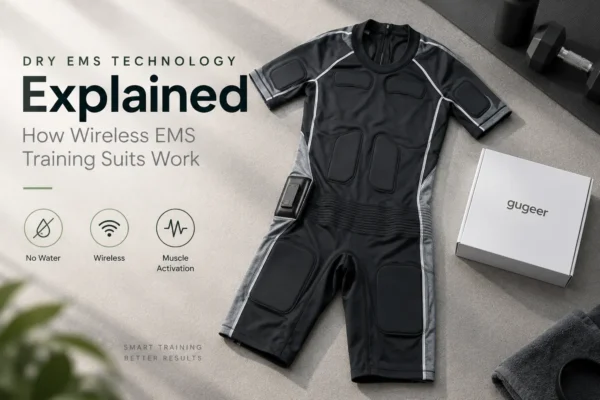
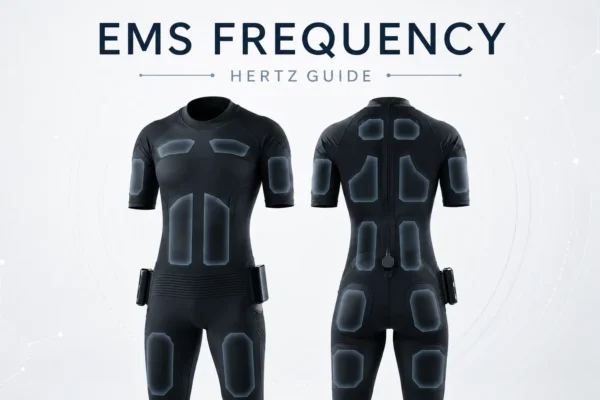
EMS suits use electrode zones positioned over major muscle groups such as the chest, back, abs, glutes, legs and arms. During training, controlled electrical impulses stimulate motor nerves while the user performs active movements such as squats, lunges and core exercises.
The Real Benefits of EMS Training Suits
Improved Muscle Activation
One of the biggest advantages of EMS training is its ability to increase muscle stimulation.
Some muscles are difficult to fully activate during normal daily activities, especially for people who spend many hours sitting.
Common examples include:
- Weak glute activation
- Poor core engagement
- Reduced muscle recruitment caused by inactivity
EMS stimulates motor nerves and can create additional muscle contractions alongside voluntary exercise.
For example,a systematic review and meta-analysis published in 2021 analyzed 16 studies involving 897 participants and found that whole-body EMS had positive effects on muscle mass and strength development, particularly when combined with exercise. However, the impact on reducing body fat was limited.
Source: PubMed – Whole-body electromyostimulation systematic review
For beginners, older adults, and people returning to exercise, improved muscle activation can be especially valuable.
Efficient Training for Busy People
One of the main reasons EMS has become popular is efficiency.
EMS sessions are often shorter than conventional workouts, with many whole-body EMS programs lasting around 20 minutes.
The main advantage is not that 20 minutes of EMS automatically equals 60 or 90 minutes of conventional exercise. Rather, EMS allows multiple muscle groups to be stimulated at the same time while the user performs active movements.
Potential Improvements in Strength and Body Composition
EMS has also been used in rehabilitation and physical therapy applications to support muscle activation during periods of reduced activity. However, fitness EMS suits should not be presented as a replacement for medical treatment or professional rehabilitation. Their use should follow appropriate professional guidance.
What EMS Training Suits Cannot Do?
EMS Does Not Automatically Burn Fat
One of the biggest misconceptions about EMS is that it can create effortless weight loss.
This is not scientifically accurate.
Fat loss mainly depends on:
- Calorie balance
- Nutrition
- Regular physical activity
- Long-term lifestyle habits
Current research suggests WB-EMS may improve muscle-related outcomes, but evidence for significant fat loss remains limited.
Source: Frontiers in Physiology – Whole Body EMS Research Review
EMS can support a fitness program, but it cannot replace proper nutrition and exercise habits.
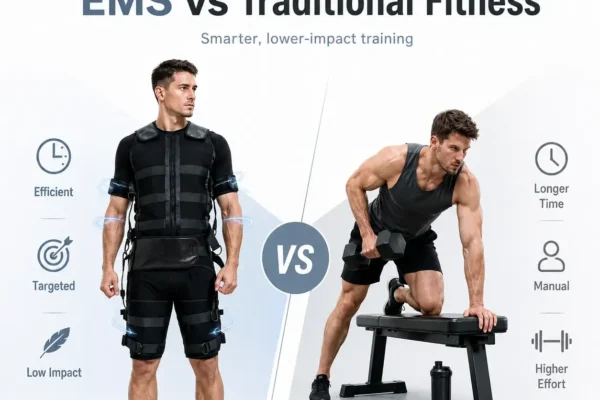
EMS Cannot Fully Replace Traditional Strength Training
Traditional resistance training provides benefits beyond muscle contraction.
It also develops:
- Coordination
- Balance
- Joint stability
- Movement technique
- Bone-loading capacity
For example, a barbell squat trains not only the legs but also:
- Body control
- Stability
- Functional movement patterns
EMS mainly focuses on muscle stimulation.
Therefore, professional athletes, strength competitors, and advanced fitness users often use EMS as a complementary tool rather than a replacement.
Higher Intensity Is Not Always Better
A common mistake among new EMS users is assuming:
More electrical intensity = better results
This is not necessarily true.
Excessive stimulation may increase:
- Muscle soreness
- Fatigue
- Recovery time
Professional EMS training requires:
- Proper intensity adjustment
- Correct electrode placement
- Controlled training frequency
The FDA also highlights that electrical stimulation devices should be used correctly, as improper use may cause risks such as skin irritation or discomfort.
Who Can Benefit From EMS Training?
EMS training may be suitable for:
EMS Studios
Gyms & Personal Training Centers
Rehabilitation & Physiotherapy Facilities
EMS Equipment Distributors
Who Should Be Careful With EMS?
EMS training is not suitable for everyone.
Therefore, people should seek professional advice before using EMS if they have:
- A pacemaker or implanted electronic device
- Serious cardiovascular conditions
- Epilepsy
- Pregnancy
- Acute injuries
The specific contraindications depend on the EMS device and its intended use. Users should always follow the manufacturer’s safety instructions and seek professional medical advice when appropriate.
Final Thoughts: Do EMS Training Suits Really Work?
So, does an EMS training suit really work?
Yes, but the results depend on how EMS is used.
Research suggests that WB-EMS can support muscle strength and lean muscle development when combined with active exercise. It can also provide a time-efficient way to stimulate multiple muscle groups during a structured training session.
But EMS is not a shortcut. It works best as part of a broader training approach that includes exercise, nutrition, recovery and professional guidance.
For gyms, EMS studios and rehabilitation-focused facilities, EMS can be a useful addition to an existing training or recovery program.