When people first experience EMS (Electrical Muscle Stimulation) training, one of the most common questions is:
“What does the frequency setting mean, and why does it matter?”
In an EMS training system, frequency is one of the most important parameters that determines how muscles respond to electrical impulses. Measured in Hertz (Hz), frequency represents the number of electrical pulses delivered to the muscles every second.
For example:
- 10 Hz = 10 electrical pulses per second
- 50 Hz = 50 electrical pulses per second
- 100 Hz = 100 electrical pulses per second
Different frequency ranges create different muscle contraction patterns, affecting muscle endurance, strength output, comfort, and fatigue levels. Understanding frequency selection helps fitness professionals, rehabilitation specialists, and EMS studio operators design safer and more effective training programs.
What Happens Inside the Muscle During EMS Stimulation?
During normal exercise, the brain sends electrical signals through the nervous system to activate motor neurons, which then stimulate muscle fibers to contract.
EMS works by applying controlled electrical impulses through electrodes placed on the skin. These impulses stimulate peripheral motor nerves, causing targeted muscle contractions.
The frequency of these impulses influences:
- Contraction speed
- Muscle tension
- Smoothness of movement
- Energy consumption
- Muscle fatigue rate
A lower frequency creates separated muscle contractions, while a higher frequency creates a more continuous contraction pattern.
EMS Frequency Range Explained: From Low to High Hertz
1–10 Hz: Low Frequency — Muscle Endurance & Gentle Activation
Low-frequency EMS settings usually create slower, individual muscle contractions.
At this range:
- Muscle fibers contract more slowly
- Contractions feel like gentle twitching
- Energy demand is relatively lower
- Suitable for activation and endurance-focused programs
Low frequencies are often used in:
- Beginner EMS sessions
- Muscle awareness training
- Recovery-oriented programs
- Low-intensity rehabilitation applications
However, very low frequencies may not create strong continuous contractions because the stimulation intervals are longer.
Example application:A rehabilitation professional may use lower frequencies when the goal is to gradually activate muscles after inactivity or injury.
20–50 Hz: Controlled Muscle Activation & Functional Training
The range between approximately 20 and 50 Hz is widely used in neuromuscular electrical stimulation research and clinical applications.
At this frequency range:
- Muscle contractions become smoother
- Force production increases
- Muscle activation becomes more consistent
- Fatigue can be better controlled compared with very high frequencies
Many EMS protocols use this range because it provides a balance between effective contraction and user comfort.
Common applications include:
- Functional rehabilitation
- Strength maintenance
- Mobility training
- General EMS fitness sessions
50–100 Hz: Strength Training & High-Intensity EMS Workouts
For many EMS fitness applications, frequencies between 50 and 100 Hz are commonly selected because they can create stronger and smoother muscle contractions.
This range is often associated with:
- Higher muscle force output
- Increased recruitment of fast-contracting muscle fibers
- Intense full-body EMS workouts
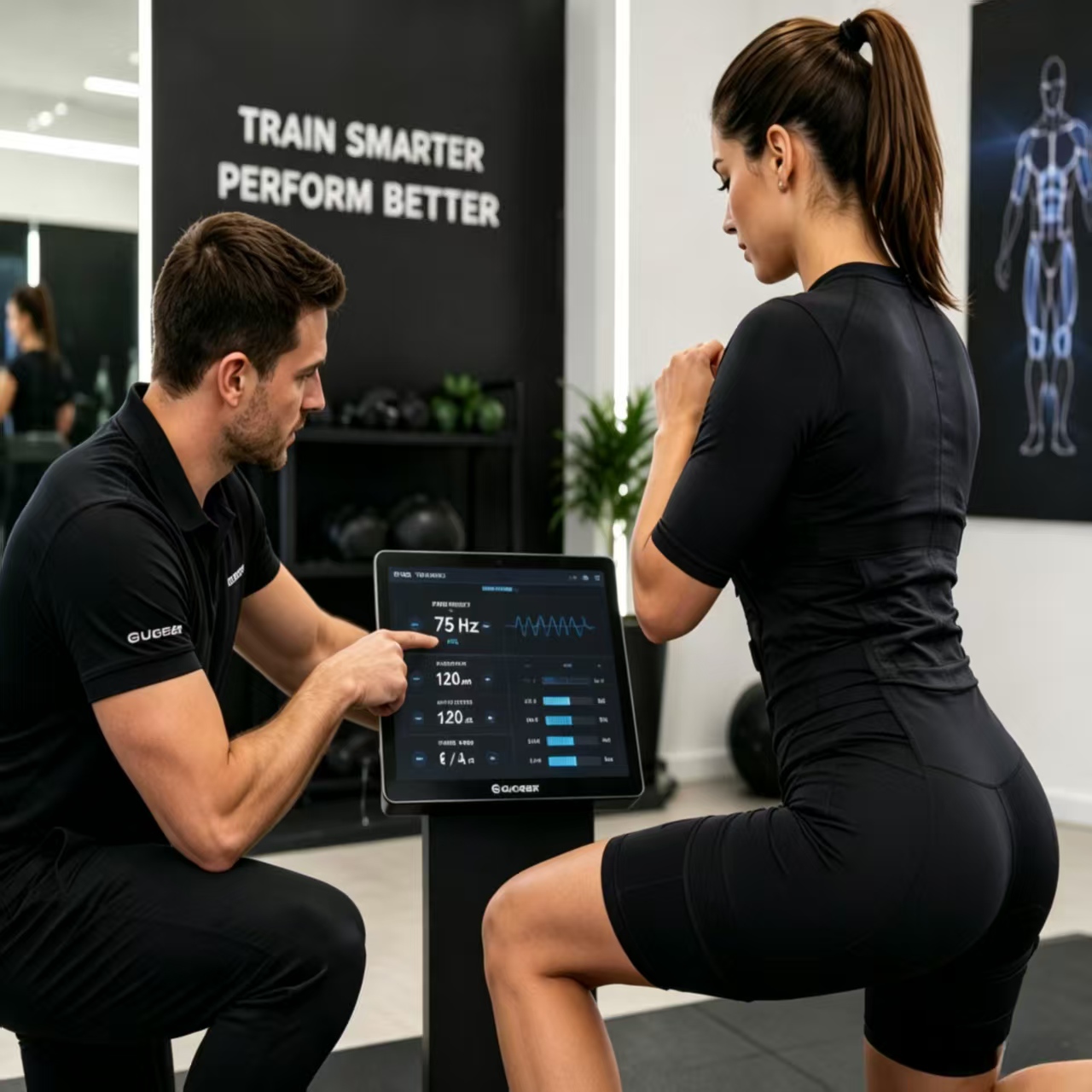
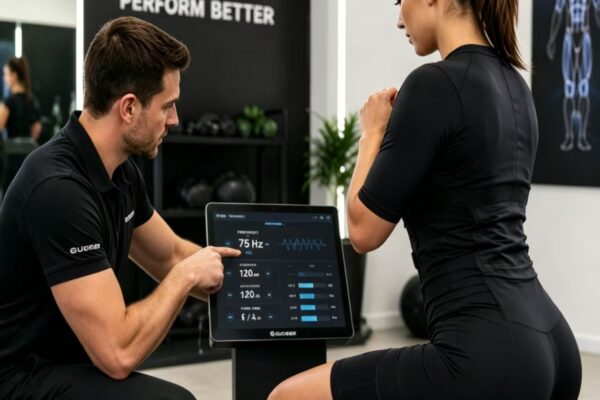
Research on EMS training protocols has frequently investigated stimulation frequencies around 50–100 Hz, with some strength-oriented protocols using approximately 75 Hz under controlled conditions.
This frequency range is commonly used in:
- EMS fitness studios
- Athletic conditioning
- Strength-focused training programs
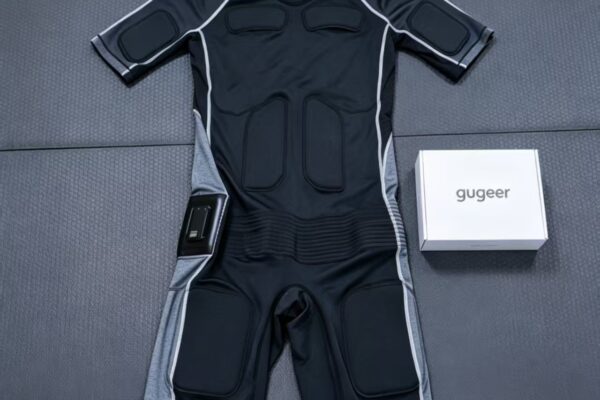
For example, during a squat exercise wearing an EMS suit, a carefully selected frequency can help enhance muscle contraction intensity while the user performs voluntary movement.
Above 100 Hz: Higher Stimulation Speed, But More Considerations
Higher frequencies can produce very rapid stimulation patterns. However, increasing frequency does not always mean better results.
When frequency becomes too high:
- Muscle fatigue may occur faster
- Energy demand increases
- Comfort may decrease for some users
Studies suggest that frequencies above approximately 80–100 Hz may increase fatigue depending on stimulation parameters and training conditions.
Therefore, professional EMS systems usually combine frequency adjustment with other parameters such as:
- Pulse width
- Intensity level
- Work/rest cycle
- Training duration
How Do Professional EMS Systems Choose the Right Frequency?
There is no single “perfect” EMS frequency for every person.
Professional EMS programming considers:
Training Goal
Different goals require different stimulation strategies.
| Goal |
Common Frequency Approach |
| Muscle activation |
Lower frequency ranges |
| Endurance training |
Lower to medium frequencies |
| Strength development |
Medium to higher frequencies |
| Recovery programs |
Comfortable lower settings |
Muscle Group
Different muscles respond differently depending on:
- Size
- Fiber composition
- Training status
- Individual sensitivity
Large muscle groups such as:
- Quadriceps
- Glute muscles
- Back muscles
often require carefully adjusted parameters to achieve comfortable and effective contractions.
User Experience Level
Beginners usually benefit from:
- Lower intensity
- Moderate frequency
- Gradual progression
Experienced EMS users may tolerate:
- Higher intensity
- Stronger contractions
- More demanding programs
Professional EMS systems allow trainers to customize settings according to each user’s condition.
Frequency Is Only One Part of EMS Technology
Although frequency plays an important role, effective EMS training depends on multiple technical parameters working together.
A professional EMS system combines:
Frequency (Hz)
Controls the speed of electrical impulses.
Pulse Width (μs)
Determines how long each electrical pulse lasts and influences motor nerve activation.
Intensity (mA)
Controls the strength of stimulation.
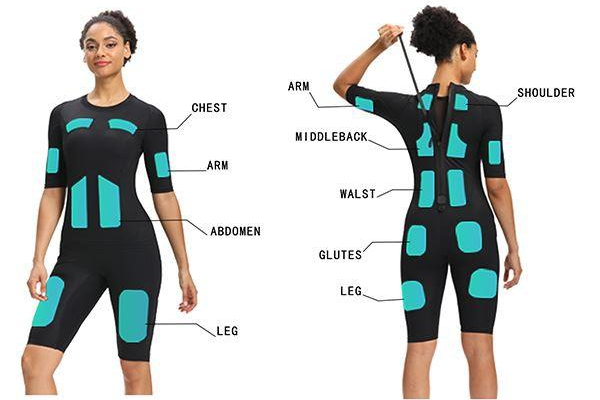
Electrode Position
Determines which muscles receive stimulation.
A well-designed EMS training program balances all these factors instead of simply increasing frequency.
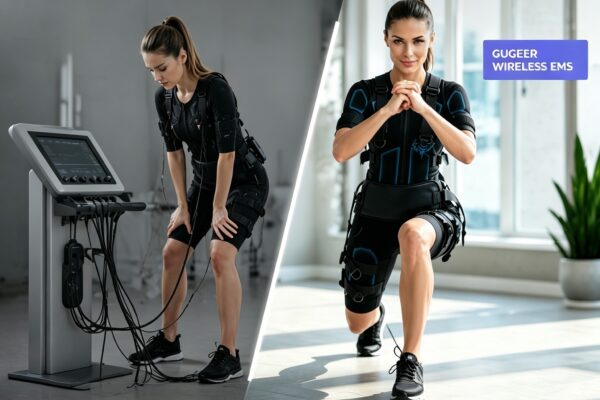
How Gugeer EMS Technology Applies Frequency Control
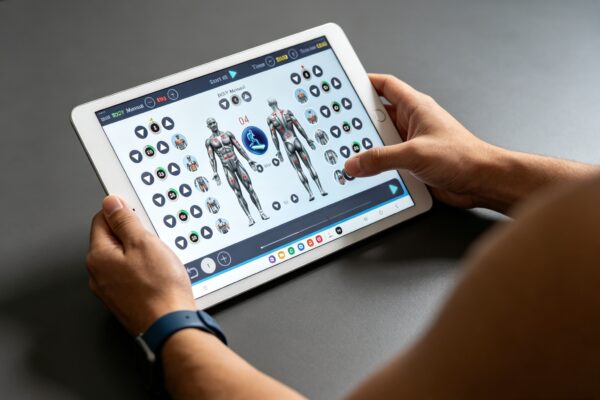
Modern EMS training equipment is designed to provide precise parameter management instead of fixed stimulation.
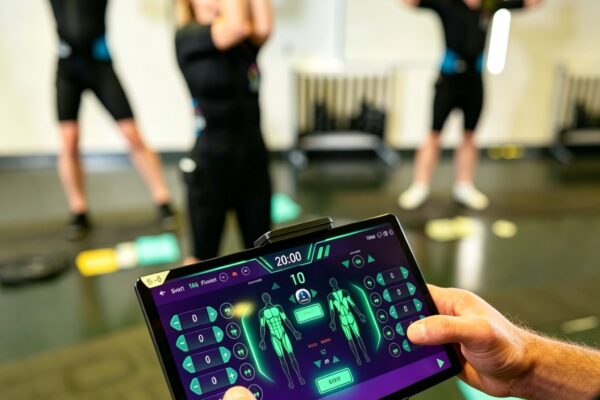
Professional EMS solutions allow fitness studios, rehabilitation centers, and sports facilities to adjust:
- Frequency levels
- Training intensity
- Muscle group activation
- Individual user programs
Through intelligent control systems, trainers can create personalized EMS experiences for different users, from beginners to professional athletes.
Final Thoughts: Choosing the Right Hertz for Better EMS Results
EMS frequency is not about choosing the highest number possible.
The best results come from selecting the right frequency range based on:
✔ Training objectives
✔ User experience
✔ Muscle condition
✔ Session intensity
✔ Recovery requirements
Understanding how different Hertz levels affect muscle response allows EMS professionals to create safer, more efficient, and more personalized training programs.
As EMS technology continues to develop, intelligent frequency control will remain one of the key factors in improving fitness, rehabilitation, and sports performance applications.
References
1.Doucet BM, Lam A, Griffin L. Neuromuscular electrical stimulation for skeletal muscle function. Yale J Biol Med. 2012 Jun;85(2):201-15. Epub 2012 Jun 25. PMID: 22737049; PMCID: PMC3375668.
2.Patel P, Green M, Tram J, Wang E, Murphy M, Abd-Elsayed AA, Chakravarthy K. Latest Advancements in Transcutaneous Electrical Nerve Stimulation (TENS) and Electronic Muscle Stimulation (EMS): Revisiting an Established Therapy with New Possibilities. J Pain Res. 2025 Jan 9;18:137-153. doi: 10.2147/JPR.S493162. PMID: 39816205; PMCID: PMC11733168.
3.Balke M, Teschler M, Schäfer H, Pape P, Mooren FC and Schmitz B (2022) Therapeutic Potential of Electromyostimulation (EMS) in Critically Ill Patients—A Systematic Review. Front. Physiol. 13:865437. doi: 10.3389/fphys.2022.865437